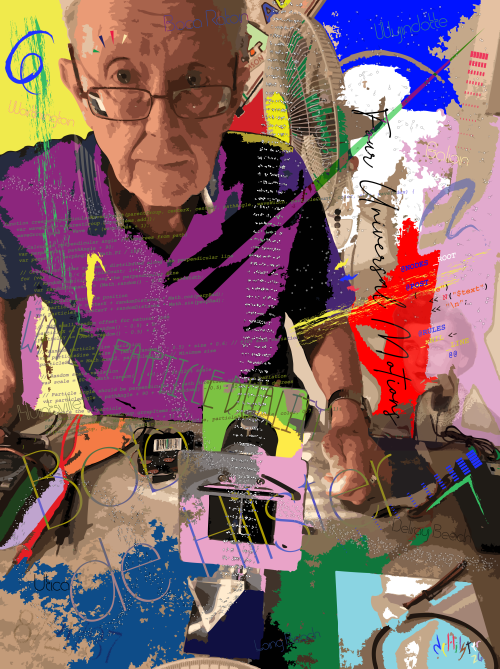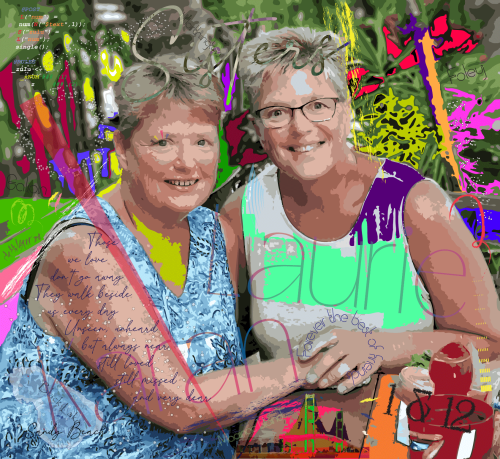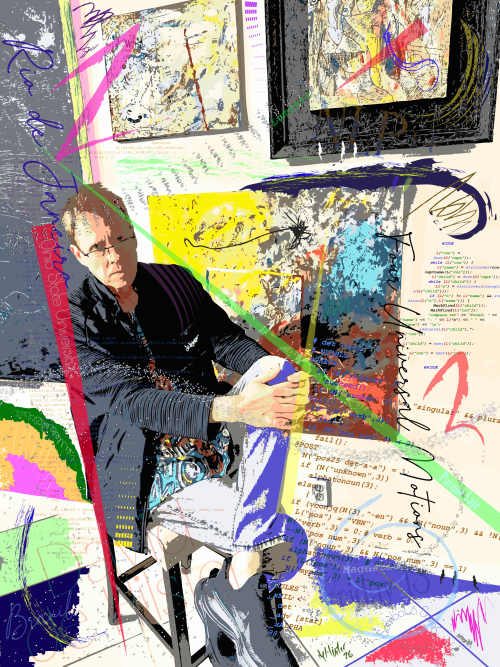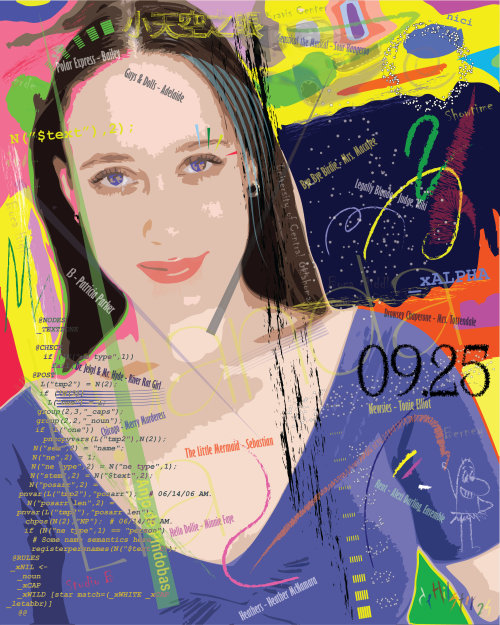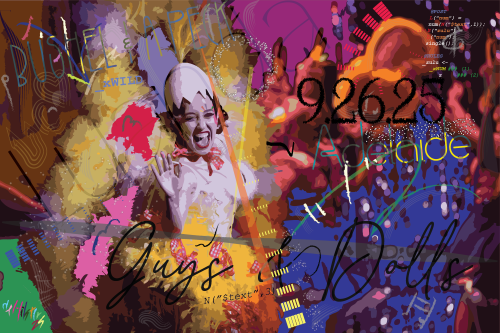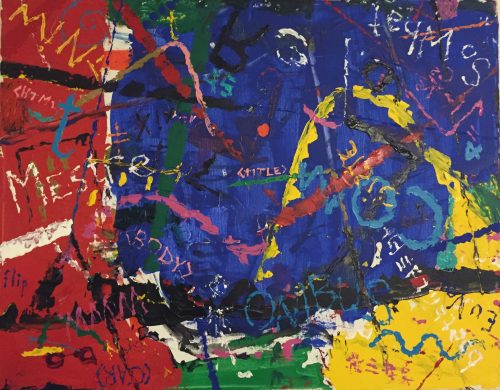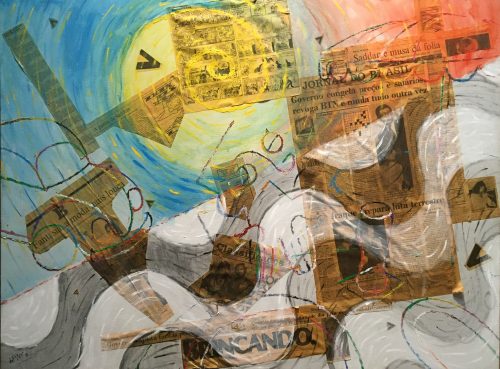
David de Hilster’s artwork includes what he terms, “intellectual graffiti”. It appeared in his work as early as 1993 and has come back in full force in his new digital artworks.
Here is David in his own words about this style:
“Being a scientist and an artist, I like to force the viewer have to use their brain in order to understand my art. I don’t want to make it easy for them. They have to work to read a word or phrase. The more they concentrate on the piece, the more they find. I also often put ‘easter eggs’ into a work that are hidden in plain sight.
I layer onto reality things that are meaningful to me and the subject. This includes actual computer code from the AI computer programming language I helped invent, to computer code I use to draw what my father and I call the ‘Four Universal Motions in Physics‘. The four universal motions which are physical models for light, gravity, magnetism, and electricity use computer code that I write to render the little particles that are generated on my works where every particle is unique.
I also include words and images that are important to the person or subject I am working on. On top of that, I use a digital canvas to draw pencil and digital graffiti lines and shapes and even cartoons, weaving it all into a dynamic composition that has to be balanced, and beautiful – no different that when I do my pencil drawings”
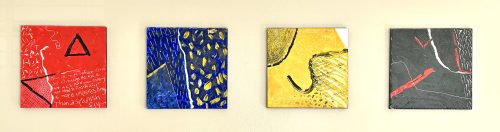
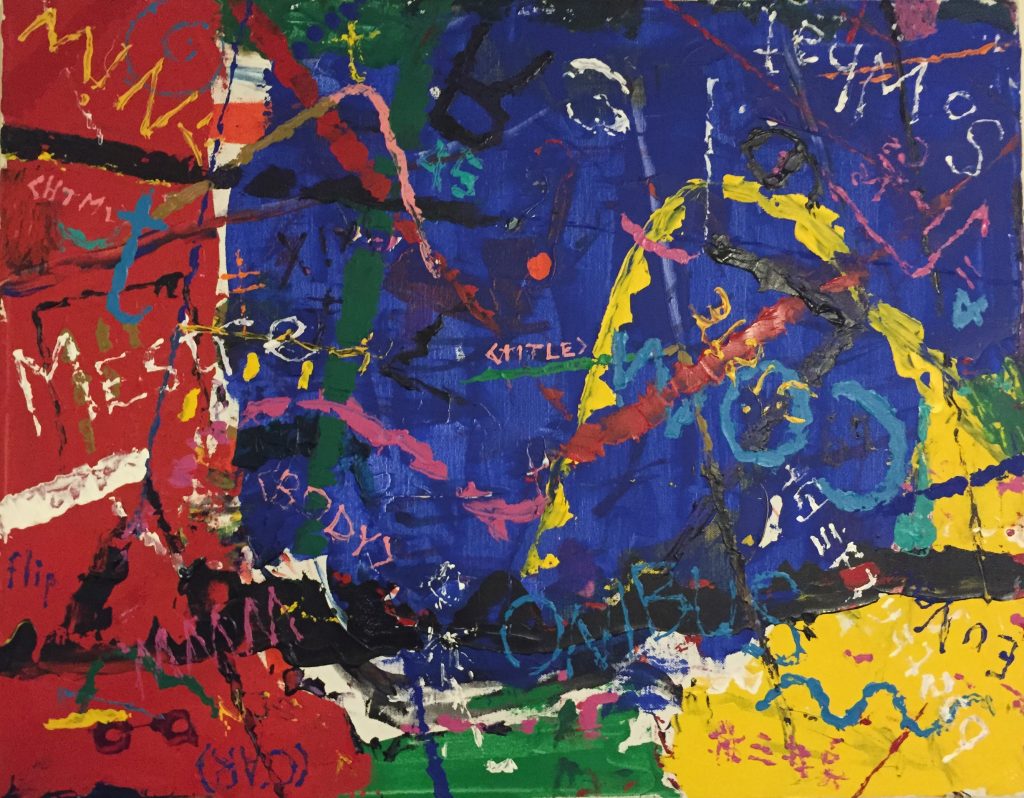
This is most likely de Hilster’ first version of what he calls “visual graffiti” from the early 1990s:
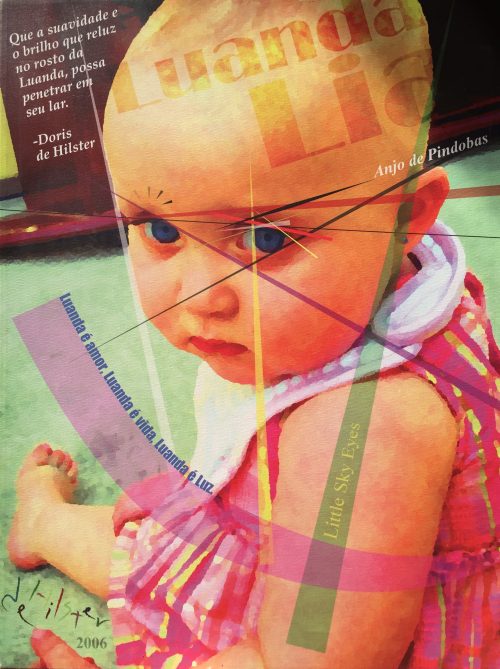
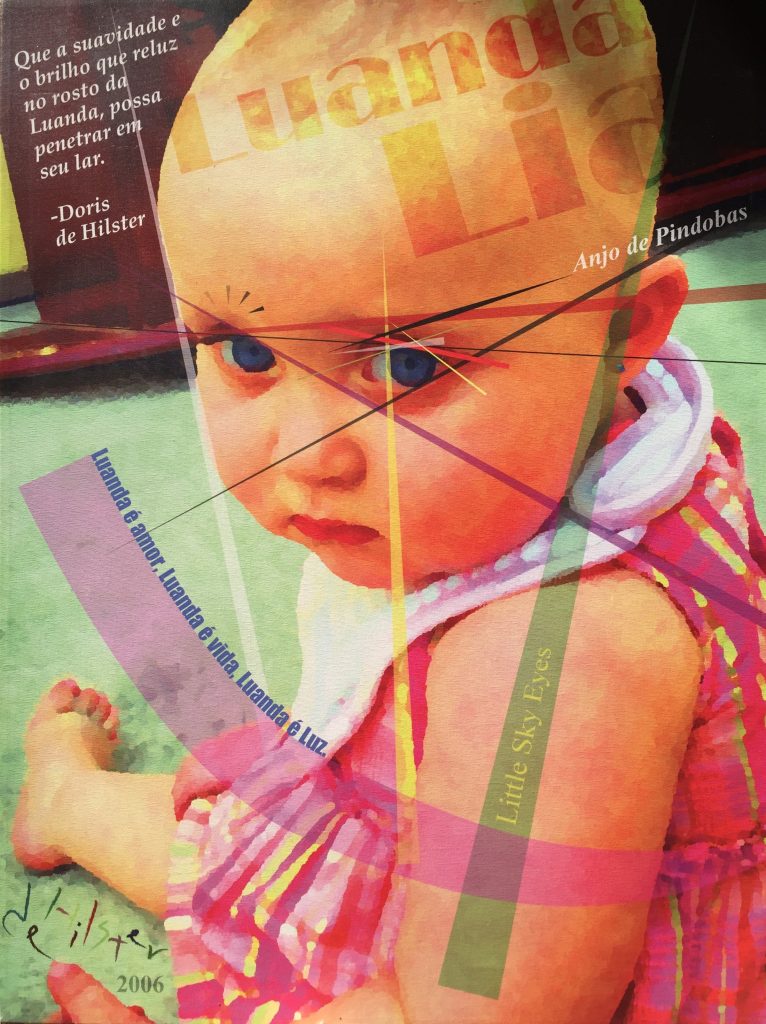
As for the inspiration for the flurry of current new works, it was inspired by an artwork he did of his child Luanda for his wife back in 2006:
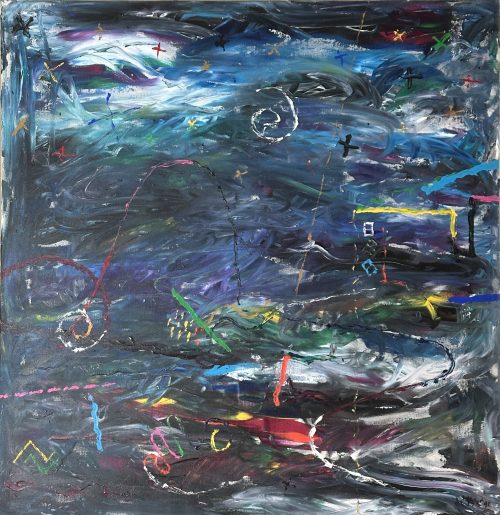
Here are all the intellectual graffiti works de Hilster has recently done and over the years: